

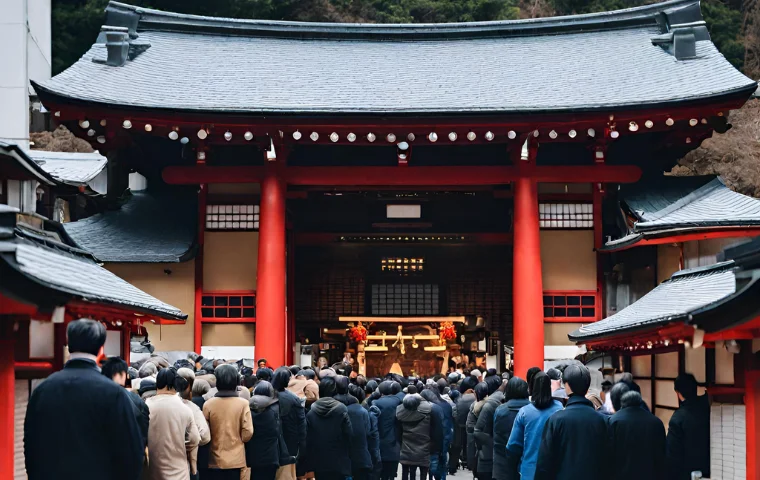
Visiting a sacred site in Japan is one of the most enriching cultural experiences for international travelers. However, navigating the subtle differences between a Shinto shrine (jinja) and a Buddhist temple (otera)—and knowing how to behave respectfully—can feel intimidating for first-time visitors.
Whether you are participating in new year’s traditions like Hatsumode or exploring ancient historical grounds, this guide covers everything you need to know about Japanese shrine etiquette and Japanese temple etiquette.
Table of Contents
- Shrine vs. Temple: What is the Difference?
- Step-by-Step Japanese Shrine Etiquette
- Step-by-Step Japanese Temple Etiquette
- Sacred Traditions: Omikuji, Ema & Omamori
- New Year’s Tradition: The Hatsumode Shrine Visit
- Experience Sacred Heritage: Visiting Izanagi Jingu on Awaji Island
- Ready to Plan Your Ultimate Sacred Awaji Island Trip?
- Frequently Asked Questions About Japanese Shrine & Temple Etiquette
Shrine vs. Temple: What is the Difference?
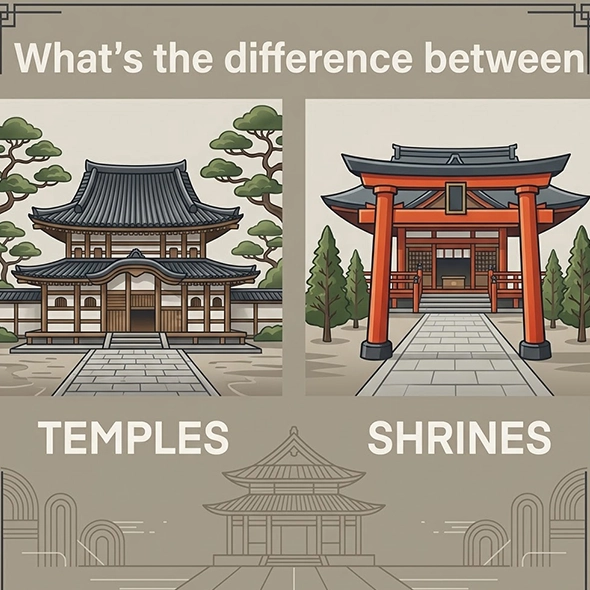
Before diving into etiquette, it is essential to distinguish between the two types of sacred grounds in Japan:
- Shinto Shrines (Jinja): Dedicated to native Shinto spirits (kami). You can identify a shrine by its iconic torii gate at the entrance, wooden komainu (lion-dog) guardians, and straw ropes (shimenawa).
- Buddhist Temples (Otera): Dedicated to Buddha and Buddhist deities. Temples feature large wooden entrance gates (sanmon), incense burners (jokoro), and pagodas.
Step-by-Step Japanese Shrine Etiquette
Shinto etiquette focuses on physical and spiritual purification before presenting gratitude to nature and the deities. Follow these steps when visiting a Shinto shrine:
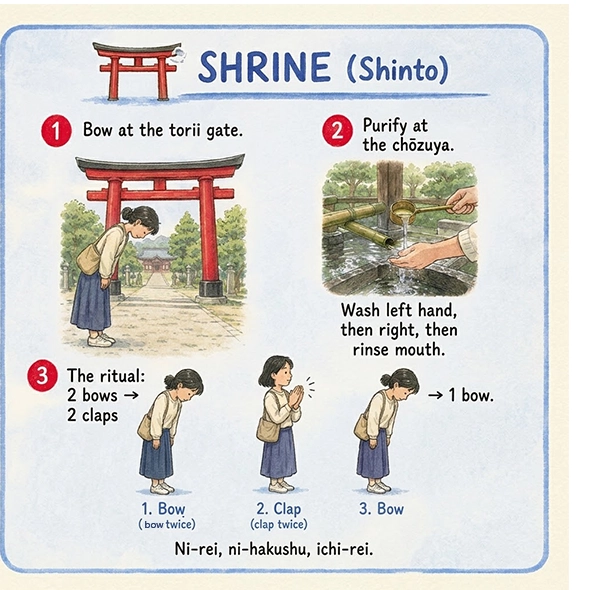
1. Passing Through the Torii Gate
The torii gate marks the boundary between the secular world and sacred space.
- Bow slightly before stepping through the gate.
- Walk along the left or right side of the path (sando). The center line is traditionally reserved for the spirits.
2. Purification at the Fountain (Temizuya/Chōzuya)
Before approaching the worship hall, purify your hands and mouth at the water pavilion (temizuya):
- Take the ladle in your right hand, scoop fresh water, and pour it over your left hand.
- Switch hands and wash your right hand.
- Cup water in your left hand to rinse your mouth (never drink directly from the ladle).
- Tilt the ladle vertically so the remaining water cleanses the handle for the next visitor.
3. How to Pray at a Shrine: “2 Bows, 2 Claps, 1 Bow”
When standing in front of the offering box (saisen-bako) at the main hall (haiden):
- Toss a small coin (or bill) into the offering box.
- Ring the large hanging bell if one is available.
- Bow deeply twice (at roughly a 90-degree angle).
- Clap your hands twice firmly in front of your chest. Hold your hands flat, make your wish or silent prayer, and bow deeply once more to finish.
Step-by-Step Japanese Temple Etiquette
While temple visits share similarities with shrine visits, there are crucial differences in Japanese temple etiquette:
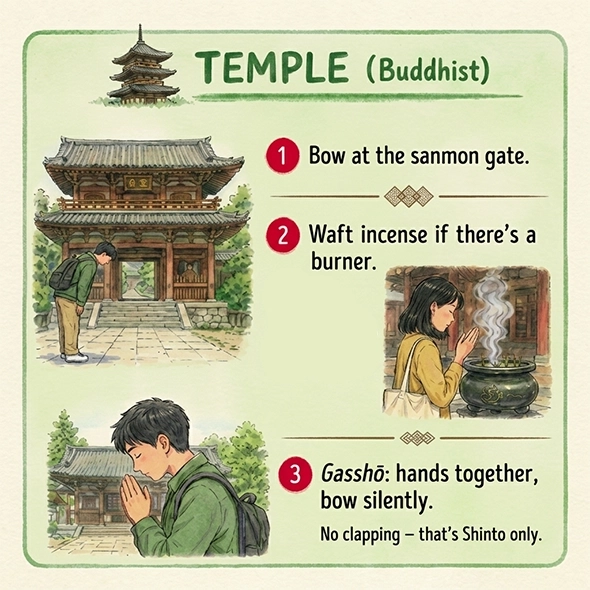
1. The Entrance Gate (Sanmon)
Bow slightly with your hands placed together in front of your chest (gassho) before crossing the threshold of the sanmon gate. Step over the raised wooden threshold rather than stepping on it.
2. Smoke Purification (Jokoro)
Many Buddhist temples feature a large incense burner in the main courtyard. Gently wave the aromatic smoke toward your head, shoulders, or body parts with your hands. This ritual is believed to bring good health, mental clarity, and spiritual cleansing.
3. Praying at a Temple (Crucial Rule: No Clapping!)
Unlike Shinto shrines, you must never clap your hands at a Buddhist temple:
- Drop your coin gently into the offering box.
- Ring the bell softly if allowed.
- Place your palms together in silent prayer (gassho) and bow your head slightly.
- Bow once more before stepping away from the altar.
Sacred Traditions: Omikuji, Ema & Omamori
During your visit to a shrine or temple, you can participate in several timeless spiritual customs:
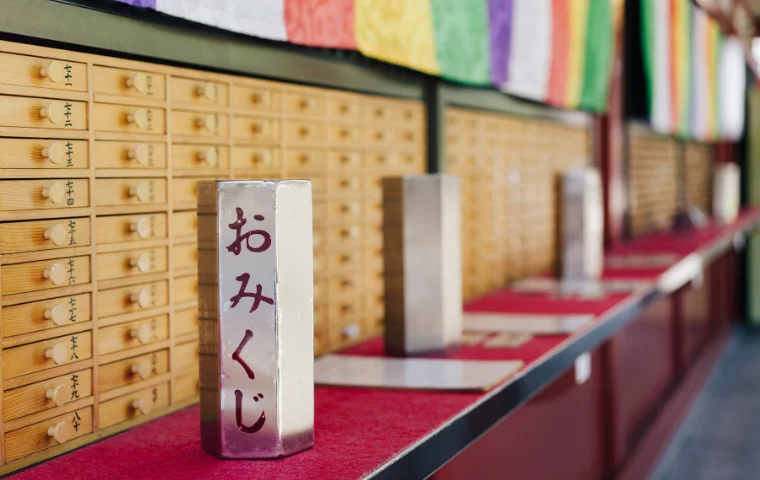
- Omikuji (Fortune Papers): Draw a paper fortune to reveal your luck in health, love, and career. If you receive a bad fortune, tie it to the designated wooden racks or pine branches so the sacred grounds can neutralize the ill luck.
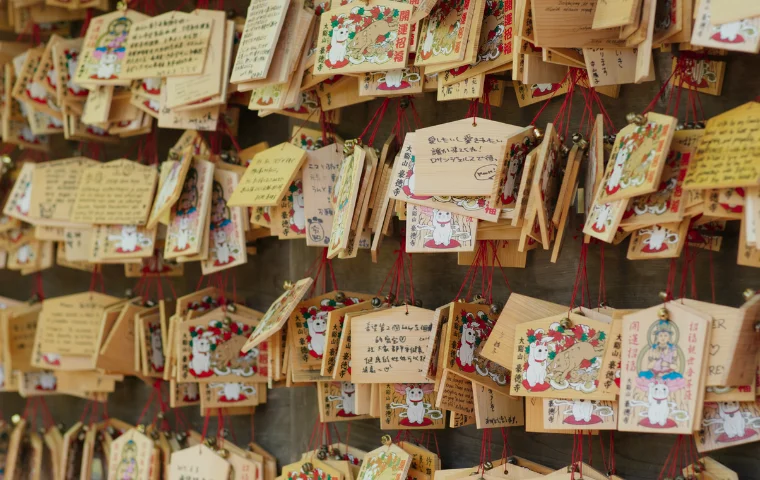
- Ema (Wooden Wishing Plaques): Write your personal wishes on a small wooden plaque and hang it on the shrine’s display board.
- Omamori (Protective Charms): Purchase fabric amulets for personal safety, academic success, or good health. It is customary to bring charms back after one year to be purified and burned in a sacred fire.
New Year’s Tradition: The Hatsumode Shrine Visit
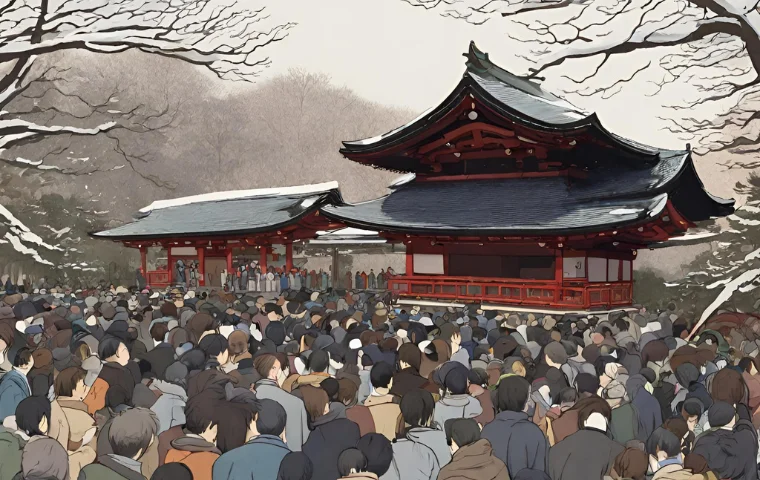
If you are traveling in Japan between January 1st and January 3rd, you will experience Hatsumode—the first shrine or temple visit of the new year. Millions of people visit local shrines at midnight or during the first days of January to say thanks for the past year and pray for fortune in the coming one.
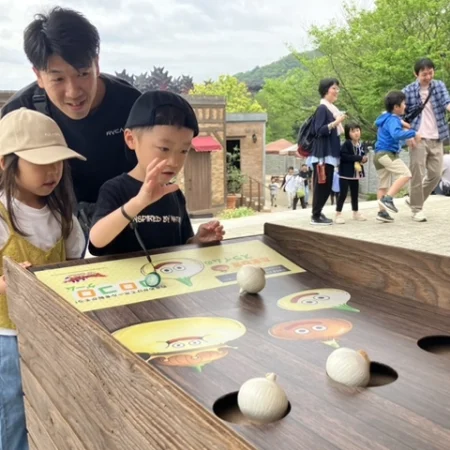
During Hatsumode, famous shrines transform into vibrant cultural festivals (matsuri) with food stalls, warm community gatherings, and festive games.
Experience Sacred Heritage: Visiting Izanagi Jingu on Awaji Island
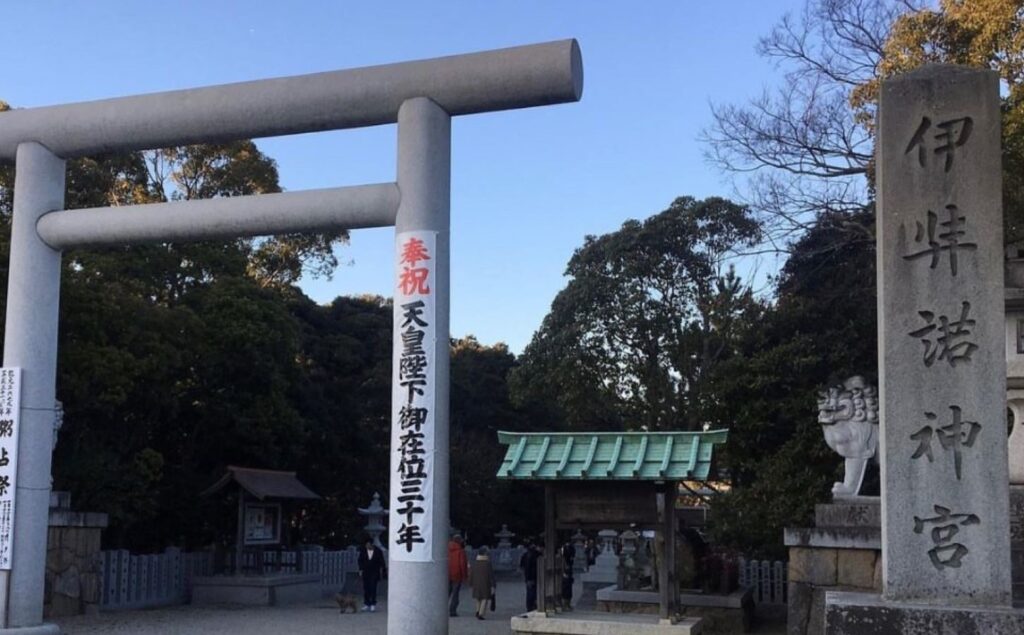
To experience these ancient traditions in a setting steeped in history, head to Awaji Island, located just 1 hour from Osaka and 30 minutes from Kobe. According to Japan’s ancient mythologies (Kojiki and Nihon Shoki), Awaji Island is revered as the first island created in Japan by the primordial gods Izanagi and Izanami.
Awaji Island is home to Izanagi Jingu Shrine, considered one of the oldest Shinto shrines in the nation. Visitors can admire the 900-year-old sacred camphor tree (Meoto-ookusu), observe traditional rituals, and experience authentic Shinto culture away from city crowds.
Want an insider look at Shinto rituals? Read our firsthand story of receiving a traditional Shinto blessing at Izanagi Jingu Shrine
Ready to Plan Your Ultimate Sacred Awaji Island Trip?
Understanding Japanese shrine etiquette allows you to connect deeply with Japan’s spiritual heritage. Beyond ancient mythology and sacred grounds, Awaji Island offers oceanfront dining, wellness retreats, luxury glamping, and fresh farm-to-table cuisine.
Looking to craft the perfect trip? Explore our Ultimate Guide to Things to Do on Awaji Island for top attractions, travel itineraries, and insider tips.
Frequently Asked Questions About Japanese Shrine & Temple Etiquette
Do you clap at a Japanese temple or shrine?
What is the etiquette for washing hands at a Japanese shrine?
What is Hatsumode in Japan?